
It wasn't banned in one go.
Commercial use in Britain began around the end of the nineteenth century, grew through the first half of the twentieth, and expanded dramatically after the Second World War. Different fibres and products were then withdrawn or prohibited at different times.
This history matters because the date of a building — or the date somebody thinks a particular product stopped being used — is not enough on its own to identify a material.
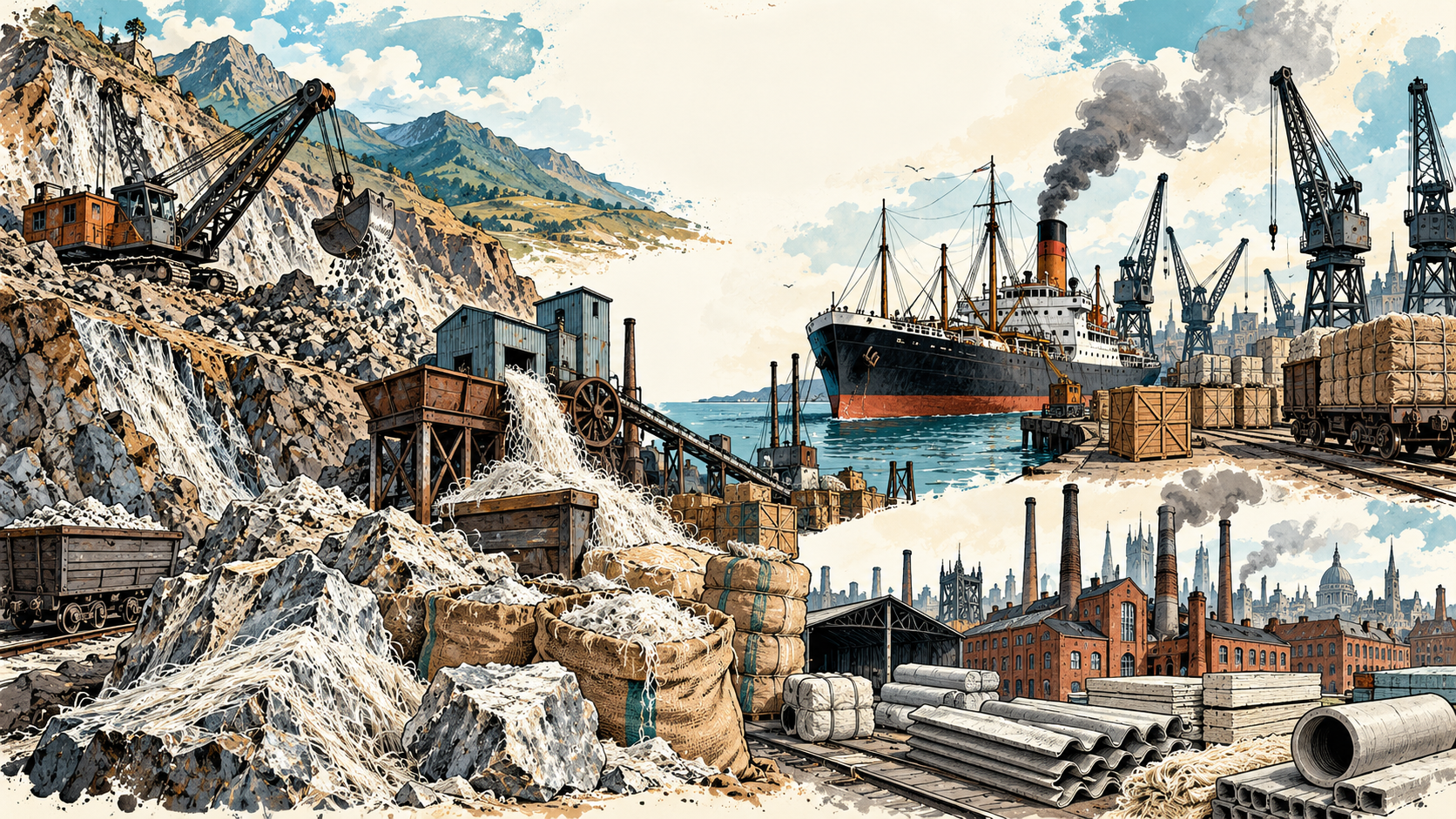
Readable history, not a hundred-page lecture.
Start with where asbestos came from and why industry valued it, move through Britain's post-war building boom, then follow the long retreat through the 1970s, 80s and 90s to the final prohibition in 1999 and the pre-2000 buildings we still survey today.
From mineral to industrial material
Asbestos is a group of naturally occurring fibrous silicate minerals. Its fibres could be separated, spun, woven or mixed into other materials. Heat resistance, insulation, fire protection, durability and resistance to chemical attack made it commercially attractive.
Mass use in post-war Britain
HSE records particularly heavy use after the Second World War, including new system-built buildings in the 1950s, 60s and early 70s, as well as refurbishment of older buildings. Asbestos appeared in insulation, sprayed coatings, boards, cement, floor products, textiles, gaskets and many other components.
The long phase-out
Blue asbestos use had almost completely stopped by about 1970, but other asbestos products continued. Sprayed coatings, AIB, decorative products and asbestos cement disappeared at different times. The final prohibition arrived in 1999.
So why does HSE say “before 2000”?
Because the final prohibition was in 1999 and HSE warns that historical cessation dates are guidelines: material already held in stock could still have been installed after some nominal cessation dates. Current HSE guidance therefore treats asbestos as potentially present in buildings built or refurbished before 2000.
Historical dates on these pages are based primarily on HSE's published history of asbestos use and UK asbestos legislation. They are presented as historical guidance, not as a way of dating an individual material.